Few things are more frustrating on a cold Fraser Valley morning than a furnace blowing cold air instead of warm. If your heating system is running but not actually heating, something is off – and figuring out why sooner rather than later will save you from a longer, colder wait.
At Hammer’s Heating and Cooling, we help homeowners across Pitt Meadows, Langley, Maple Ridge, and the surrounding Fraser Valley get to the bottom of furnace issues quickly. Some causes of cold air are simple enough to resolve on your own, while others need professional attention.
Here’s a look at the most common reasons why is my furnace blowing cold air – and what to do about each one.
Check Your Thermostat First
Before assuming the worst, take a moment to check your thermostat settings. It’s one of the most common causes of cold airflow and one of the easiest to fix.
If the fan is set to “ON” rather than “AUTO,” your furnace will blow air continuously – even when it’s not in a heating cycle. That means you’ll feel room-temperature air coming through the vents between cycles, which can easily feel like a malfunction.
Switch the fan to “AUTO” and see if the issue clears up. Also confirm that the thermostat is set to “HEAT” and that your target temperature is higher than the current room temperature. These small checks can save you an unnecessary service call.
A Clogged Air Filter
A dirty or clogged air filter is one of the most common causes of furnace problems – including cold air output.
When a filter is too blocked to allow proper airflow, the furnace can overheat. As a safety measure, a component called the high-limit switch shuts the burners off to prevent damage. The blower fan, however, keeps running – pushing unheated air through your vents.
Check your filter and replace it if it looks grey or packed with debris. Most filters should be changed every one to three months. Homes with pets or allergy sufferers may need more frequent changes.
It’s a small maintenance task, but it has a significant impact on your furnace’s performance and lifespan.

Ignition or Pilot Light Issues
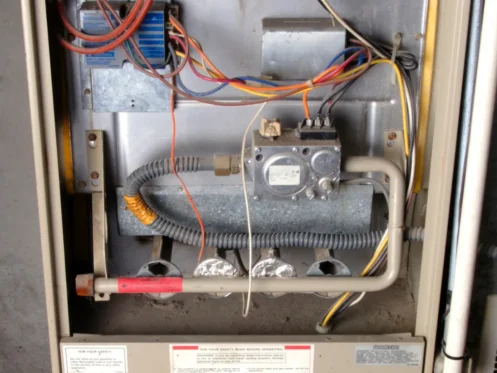
If your furnace is running but the burners aren’t lighting, cold air is exactly what you’ll get. Older furnaces rely on a standing pilot light, while newer systems use electronic ignition – and either can fail.
With older systems, check whether the pilot light is lit. If it has gone out, your furnace manual will walk you through relighting it safely. If it won’t stay lit, a technician should take a look.
For newer systems, a faulty igniter or dirty flame sensor is often the cause. The flame sensor can become coated with residue over time, preventing it from detecting the burner flame properly. The system then shuts the gas off as a safety precaution – leaving you with nothing but cold air.
Ignition issues are generally best handled by a professional rather than a DIY fix.
Overheating and the High-Limit Switch
As mentioned above, a clogged filter can cause the furnace to overheat and trigger the high-limit switch. But a dirty filter isn’t the only culprit.
Blocked or closed vents throughout the home, a struggling blower motor, or other airflow restrictions can all cause the same problem. If you’ve been closing off vents in unused rooms, try opening them back up to see if it makes a difference.
If the high-limit switch keeps tripping, it’s worth having a technician identify the root cause rather than simply resetting it. Repeated overheating can cause damage to the heat exchanger over time.
Ductwork Problems
Sometimes the reason your furnace is blowing cold air has nothing to do with the furnace itself – it’s a ductwork issue.
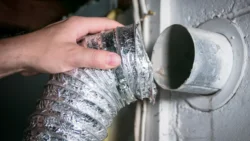
Leaky, disconnected, or poorly insulated ducts can allow warm air to escape before it reaches your living spaces. In some cases, ducts running through unconditioned areas like attics or crawl spaces draw in cold outside air, which mixes with the warm air from your furnace. The result at the vents can feel very much like a furnace malfunction, even when the unit is working fine.
If some rooms in your home are noticeably colder than others, or if certain vents produce noticeably cooler air than the rest, ductwork may be worth investigating.
A Failing Heat Exchanger
A cracked or failing heat exchanger is a more serious issue. The heat exchanger transfers heat from the combustion process to the air circulating through your home. If it’s damaged, the furnace may shut down the heating cycle as a safety response – leaving only the fan running.
A cracked heat exchanger can also allow combustion gases – including carbon monoxide – to mix with the air in your home. This is a safety concern that should never be ignored. If you suspect a heat exchanger problem, turn the furnace off and call a professional right away.
Carbon monoxide is odorless and colorless, so make sure your home has working carbon monoxide detectors on every level.
When Repairs No Longer Make Sense
If your furnace is older and repeatedly running into issues, it may be worth having an honest conversation about whether repairs are still cost-effective. A furnace approaching or past the 15 to 20 year mark – especially one that’s been requiring frequent attention – may cost more to maintain than to replace.
Exploring furnace replacement can actually save you money over time, particularly if a newer, more efficient system reduces your monthly energy costs and eliminates the cycle of recurring repairs.
Get Your Heat Back on Track
Understanding why your furnace is blowing cold air is the first step toward getting your home comfortable again. Some causes – like a thermostat setting or a clogged filter – are quick fixes any homeowner can handle. Others, like ignition problems or heat exchanger issues, need a trained technician to diagnose and repair safely.
If you’ve gone through the basics and the problem persists, it’s time to call in a professional. The team at Hammer’s Heating and Cooling is here to help homeowners across Pitt Meadows, Langley, Maple Ridge, Abbotsford, Mission, and the greater Fraser Valley get their heat back – quickly and reliably.
Schedule a furnace service or contact our team today to book an appointment.
Frequently Asked Questions
Why is my furnace blowing cold air only when it first starts up?
It’s normal for a furnace to push slightly cool air for a minute or two at startup, before the heat exchanger warms up. If cool air continues well beyond that initial period, something is likely worth investigating.
Can a dirty filter really cause my furnace to blow cold air?
Yes. A severely clogged filter restricts airflow and causes the furnace to overheat, which triggers the high-limit switch and shuts off the burners. The blower fan continues running, sending unheated air through your vents until the issue is resolved.
How do I know if my pilot light is the problem?
If you have an older furnace with a standing pilot light, look for a small flame near the burner assembly. If it’s out, your furnace won’t ignite and will only blow cold air. Your furnace manual will include instructions for safely relighting it.
Is it safe to keep running my furnace if it’s blowing cold air?
It depends on the cause. A thermostat or filter issue carries no immediate safety risk. However, if you suspect an ignition failure or heat exchanger problem, it’s best to shut the system off and call a technician before running it further.
How long should a furnace last before replacement becomes the better option?
Most furnaces have a lifespan of 15 to 20 years with regular maintenance. If your system is in that range and requiring frequent repairs, a new, more efficient unit is often the more cost-effective path forward.